

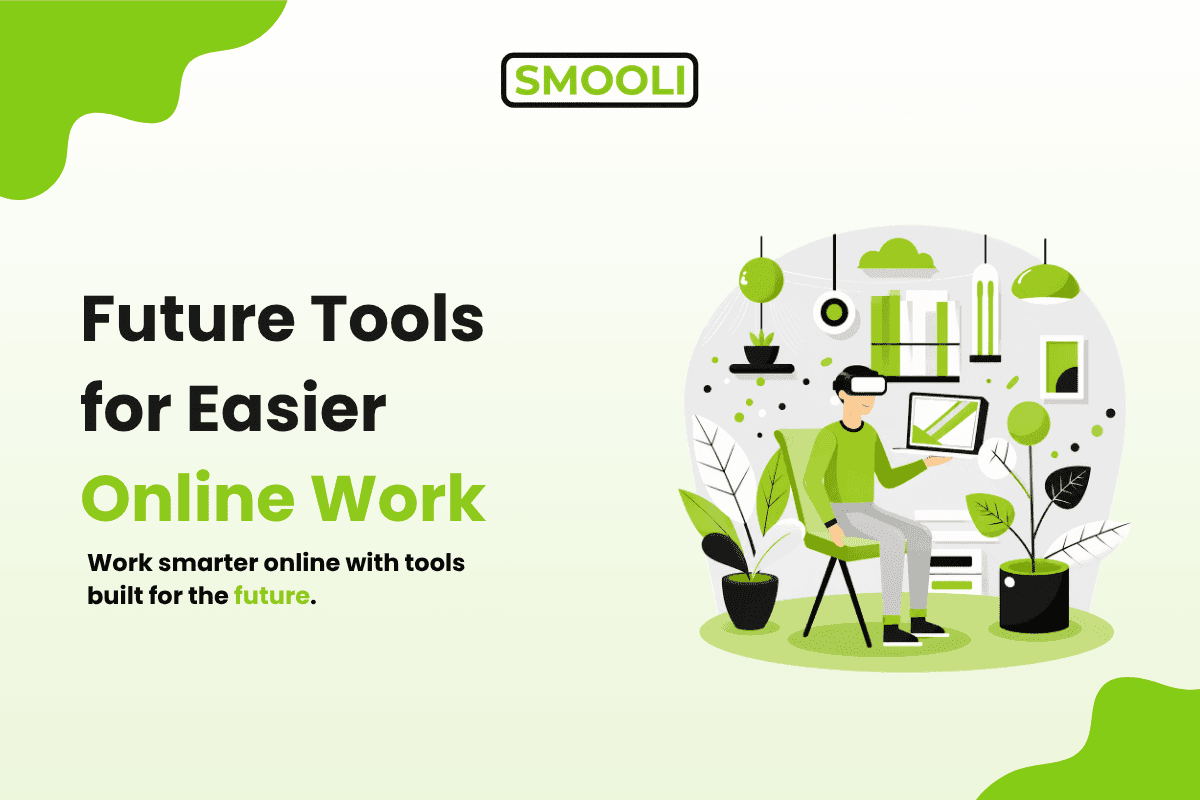
In the past few years, we've changed how we work more than we have in decades before. Every day, digital tools, remote work, and online collaboration are changing how we get things done. What once required multiple systems, physical presence, or manual effort can now be done with a few clicks, anywhere.
Yet this change brings a new challenge: the ability to efficiently juggle multiple digital tasks. Emails, content creation, file handling, and technical processes can easily become overwhelming if not handled properly. That's where today's productivity tools come in. They are not just about doing more work but making work easier, faster, and more organized.
Understanding Online Productivity Now
Online productivity means getting things done and getting them done well with digital tools. The goal is to decrease wasted time, make your workflow more efficient, and keep you organized, but without adding complexity.
Users no longer have to deal with disparate tools, but rather enjoy the power of smarter systems that help make their work easier.
It's not about being busy, it's about being effective. When tools are used correctly, people are freed to do more meaningful work than repetitive work.
The Condition of Productivity
Productivity in the past was largely manual operations. Writing, organizing files, and communication management, these things took a lot of effort and time. Automation and intelligent tools are changing this paradigm today.
Today's tools can do repetitive tasks, provide real-time insights, and automate workflows. This enables people and businesses to get more done in less time. The emphasis has moved from effort to efficiency.
Key Trends that will Influence the Future of Productivity
The future of productivity is endless innovation. We're seeing some trends really changing the way work is done.
Al does repetitive tasks faster and more accurately, reducing the need for manual labour. With cloud-based systems, teams can work together from anywhere, providing flexibility to work. Thanks to real-time insights, the user can make decisions faster, and all-in-one platforms are decreasing the need to switch between multiple tools.
Kinds of Tools That Make Work Easier
And there are all sorts of productivity tools. Let's begin with the most important ones:
1. Al Writing & Communication Tools
These tools help users to create content, write emails, and communicate well.
Best for:
- Best suited for:
- Writing Articles & Blogging Business Emails
- Word & char count
They save time on writing tasks and enhance communication.
2. Project and Task Management Tools
Tools for Organizing and Planning Your Tasks Will Make the Management Easier.
These tools can be helpful to:
- Watch your progress
- Set deadlines
- Task assignment
They're essential for people and teams managing multiple projects.
3. File and Media Management Utilities
Working with files can be a pain, especially when there are so many of them.
These tools enable users to handle:
- File conversion
- Document control
- Easier data sharing
That simplifies daily digital tasks.
4. SEO & Web Optimization Tools
SEO tools are essential for businesses and content creators to boost their online presence.
They’re good ones:
- Keyword analysis
- Boost content readability
- Mobile-friendly testing
These tools help you to make better decisions and grow.
5. DNS and Web Services
Technical tasks such as domain management and DNS monitoring can be complicated.
These processes are facilitated by modern tools, which offer:
- DNS requests
- URL shorteners
- Insights on website performance!
Traditional and Modern Productivity Tools Compared
There is a huge gap between old systems and modern tools. Here's a good side-by-side:
| Feature / Area | Traditional Approach | Productivity Tools Today |
|---|---|---|
| Assignment Tracking | Manual tracking | Automated and organized |
| Communication | Email-based and slow | Live and collaborative |
| File Management | Numerous platforms | Centralized systems |
| Workflow Efficiency | Time-consuming | Streamlined & optimized |
| Automation | None or limited | Robotic automation |
| Access | Location-based | Access from anywhere |
This change emphasizes how modern tools are designed to be less effortful and more productive.
Advantages of Modern-Day Productivity Tools
The right tools can transform the way you work. You're not overwhelmed, you're just more capable of doing stuff.
The key benefits:
- Automate repetitive processes to save time
- Improving accuracy and reducing human errors
- Organised workflows for structure
- Easing your load by simplifying the complex
- Tools for collaboration to improve co-operation
These benefits mean we can concentrate on the important work, rather than getting caught up in routine work.
Boosting workflow productivity
Efficiency is not just speed. It's about the effortless movement of work from one stage to the next. Modern tools make the workflow easier by getting rid of duplicate processes and combining work.
Users can do their tasks in one place, rather than switching between different apps. Automation does the repetitive tasks without any manual intervention, and real-time updates keep it on track.
That's the approach taken by platforms like Smooli AI that provide a suite of tools to help users manage writing, SEO, file handling, and web-related tasks all in one place. It makes things easy and helps you do your work easily. Need more information or assistance? Submit Your Inquiry
Best Practices for Maximum Productivity
There are some practical strategies to follow to get the most out of productivity tools.
Use fewer platforms with many features instead of many. Automate as much as possible to save time and effort. Keep your workspace neat so you can find things easily.
Reviewing your workflow regularly is also important. Over time, small improvements add up to big efficiency gains.
Productivity-Hindering Mistakes
Even with the best tools, some errors can limit your effectiveness. Many users tend to make their workflow unnecessarily complex.
Common errors are:
- Using too many tools at one time
- Not using automation features
- Not reviewing and improving workflows
- Too much on the schedule
The best way to stay productive is often the simplest and most to the point.
Productivity Online: The Future
Productivity's future is, and will continue to be, simple and efficient. As technology progresses, tools are going to become more intelligent and intuitive.
We can expect better automation, more personalized workflows, and deeper integration across platforms. Currently, such tasks require multiple steps, and will likely be done in one step. This will further reduce the complexity and improve the overall efficiency.
AI will play a bigger role, but humans will always be needed for creativity and decision-making.
Conclusion
Multitasking on digital tasks need not be overwhelming. With the right tools and strategies, you can streamline your workflow and save time.
With the right tools and strategies, you can streamline your workflow and save time.
The future of online productivity isn’t about doing more work; it’s about doing the right work, smarter. By focusing on organisation, automation, and smart tools, you can build a workflow that helps you achieve your goals, not hinders you.
Make small changes today, and you will see a big difference in the way
Frequently Asked Questions (FAQ)
Q1. What are online productivity tools?
Online productivity tools are digital solutions that help users manage tasks, organize workflows, and boost efficiency.
Q2: How do productivity tools save time?
They automate repetitive tasks, reduce manual effort, and simplify complex processes.
Q3: Are productivity tools good for small businesses?
Yes, they assist small businesses in organizing operations, improving efficiency, and reducing workload.
Q4: What's next for productivity software?
Looking ahead, we'll see smarter automation, better integration, and more personalized user experiences.
Q5: How does Smooli Al improve productivity?
Smooli Al gives access to a number of tools to help manage writing, SEO, file handling, and web tasks in a more streamlined way.
Q6: Is Smooli Al easy to use for beginners?
Yes, it is designed with a simple interface, making it accessible for users with different levels of experience.
Q7: What is the biggest challenge in managing digital tasks?
The biggest challenge is handling multiple tasks efficiently without feeling overwhelmed.
Q8: Can productivity tools replace manual work completely?
No, they assist users by automating tasks, but human input is still needed for decision-making and creativity.