

My to-do list used to feel like it was alive. I'd knock five things off and somehow come back to find eight more waiting. Emails, file conversions, trying to figure out why my website wasn't showing up on Google, not the big strategic stuff, just the constant low-level noise that eats your day.
I started using Al tools out of mild desperation, honestly. And I didn't expect much. But something shifted, not dramatically, more like the slow realization that I was getting through afternoons without that familiar sense of falling behind.
Here's what I've actually found useful, and what to look for if you're thinking about dipping in.
So what are Al tools, actually?
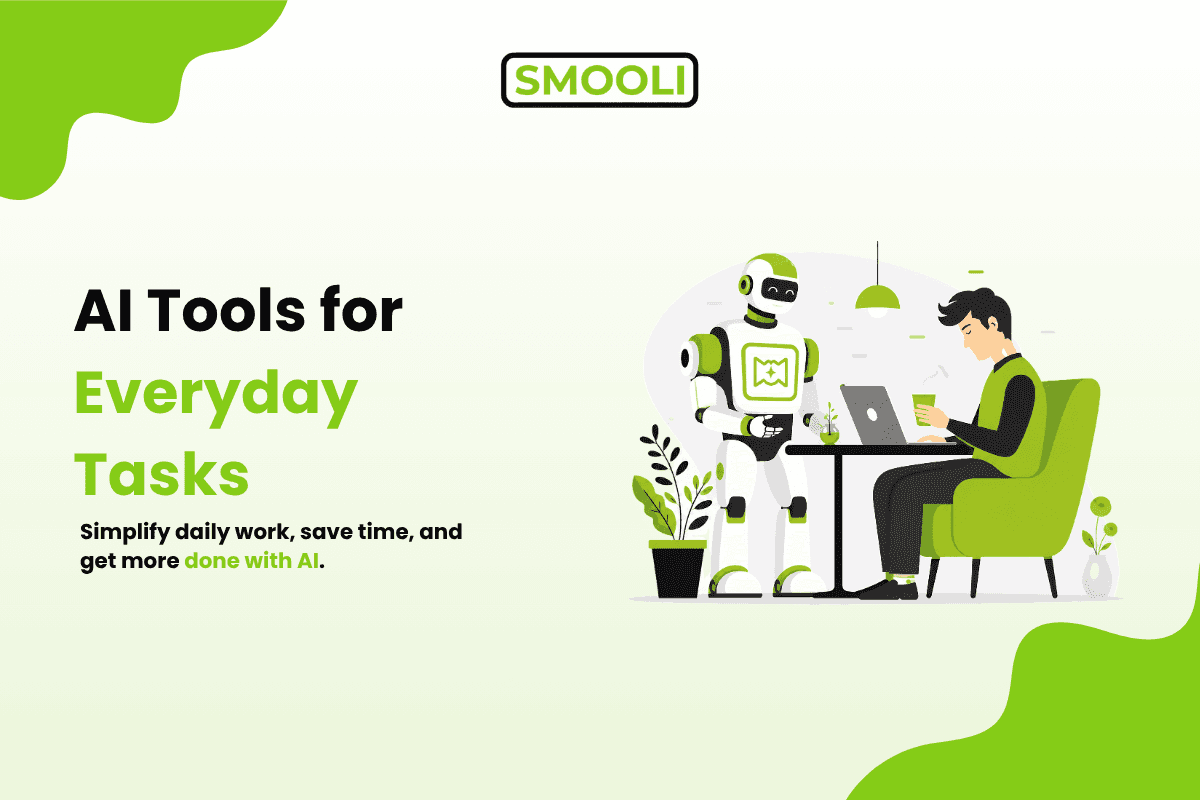
The basic idea is that they're software that does more than just execute commands; they adapt. They pick up on patterns, make smarter suggestions the more you use them, and take over the repetitive stuff so you don't have to.
Writing tools that pull together a draft when your brain is empty. SEO tools that tell you what's broken on your site without requiring you to become an SEO expert first. File tools that handle the conversions you'd otherwise Google your way through at 11 pm. That sort of thing.
They're not magic. But when they work, they genuinely work.
Why are people actually using them now?
A few years ago, this felt like enterprise territory, big budgets, IT departments, not for regular people. That's genuinely not the case anymore.
The time thing is real
Tasks that used to take an hour take ten minutes. Not because the work disappeared, but because the slow part, the blank-screen staring, the manual formatting, and the going back and forth get handled.
You don't need to be technical
The better tools are built for people who just want to get something done. If you can use a normal app, you can use most Al tools. No learning curve worth mentioning.
Fewer mistakes happen
When a tool is scanning for issues and flagging them, you catch things you'd skip right past otherwise. It's not that humans are bad at this; we're just fallible and busy.
Platform-switching drops significantly
This one surprised me. I didn't realize how much time I was losing just moving between tools until I wasn't doing it as much.
The categories worth knowing about
Writing and content
Writing takes up a disproportionate amount of most people's time. Emails, blog posts, product copy, captions, it adds up. Al writing tools don't replace your judgment; they just mean you're editing a draft instead of staring at a blank page. That alone is worth something.
SEO and website health
SEO is genuinely confusing if it's not your main job. The Al tools that work well here skip the jargon and just tell you: here's what's wrong, here's why, here's what to fix. For small business owners, especially, that kind of clarity is hard to put a price on.
File and media handling
PDF to Word. Image compression. Merging documents. These aren't glamorous problems, but they're real ones. Having a tool that handles it all in one place, instead of hunting down a different converter for each format, removes more friction than you'd expect.
DNS, domain, and web utilities
If you run a website, you've probably hit a wall with DNS issues or SSL problems and had no idea where to start. Good Al utilities surface that information clearly. You don't need to understand all of it; you just need to know what's wrong and what to do about it.
Everyday productivity
Password generators. Unit converters. Quick calculations. These sound minor, and individually they are. But the small friction points in a day add up faster than you think. Removing them quietly improves how a whole workday feels.
What you actually get out of it
More done in the same hours, not in a hustle-culture way, just genuinely better throughput. Less mental overhead from the repetitive stuff. Lower costs because one platform that covers several needs beats five separate subscriptions. And honestly? A calmer workday. When the background noise quiets down, you can actually think about the work that matters.
How to pick something actually worth using
There are a lot of Al tools out there, and a fair number of them are either underwhelming or just solving problems you don't have. A few things that help:
Start with the thing that's actually slowing you down, not the thing that looks impressive in a demo. If writing is your bottleneck, start there. If it's file management, start there.
Look for tools that do more than one thing well. Managing multiple platforms for five different tasks isn't an improvement over the problem you started with.
Try it before you pay for it. Most have free tiers or trials. Use them long enough to know whether it fits how you work, a week or two is usually enough to tell.
And don't pick anything that requires a tutorial just to get started. If it's not reasonably intuitive, it will slowly fall out of your workflow regardless.
A few things to keep in mind once you're using them
Review what the Al produces. It's good, but it's not perfect, and the output still needs your eyes on it before it goes anywhere. Combine tools where it makes sense; they often work better together.
Use them consistently, not just when you remember to. And keep an eye on updates, because these tools improve faster than most software does. The Al does the heavy lifting. Your judgment is still the thing that makes it useful.
Who's actually finding this useful?
Freelancers juggling multiple clients, getting content out faster without burning out. Small businesses handling technical website stuff without having to hire for it. Students are staying on top of multiple courses without the usual chaos. The common thread is that these are people with too much on their plates, and these tools quietly take some of it off.
Where is this heading
The tools are getting more personalized, better at connecting, and faster at adapting to how you actually work. The people building habits around them now will have a real advantage down the road. Not because Al replaces how they work, it doesn't, but because it removes the parts that were always slowing them down.
A platform worth checking out
There are solid individual tools for writing, SEO, file conversions, and DNS checks; most do their one thing pretty well. What's harder to find is something that ties it all together without adding another layer of management overhead.
Smooli Al is worth a look if that's the problem you're trying to solve. Writing, SEO, file handling, DNS utilities, and everyday productivity tools in one place. If you're tired of the platform-switching, it addresses that directly.
The short version
Everyday tasks don't have to pile up the way they do. The right Al tools change how much you can get through, not by working harder, but by clearing out the friction that was always there, just quiet enough to ignore.
Start with one thing. See if it fits. Most people who do that end up wishing they'd started earlier.
Frequently Asked Questions (FAQs)
What are Al tools actually used for?
Mostly: automating the repetitive stuff, speeding up content creation, improving how your site performs, managing files, and cutting down the low-level noise in your workflow.
Do you need a technical background?
For most of the good ones, no. They're built for regular use. If you can navigate a basic app, you're fine.
Will Al replace human work?
It takes over the repetitive, time-consuming parts. The thinking, the creative judgment, the calls that actually matter, that's still on you. Which is probably where it should stay.
What's the biggest actual benefit?
Time. Getting back hours that were going toward tasks that didn't need a human doing them in the first place.
How do you start?
Find the one thing that's slowing you down most right now. Find a tool that targets it. Use it consistently for a couple of weeks before deciding whether it's worth keeping.